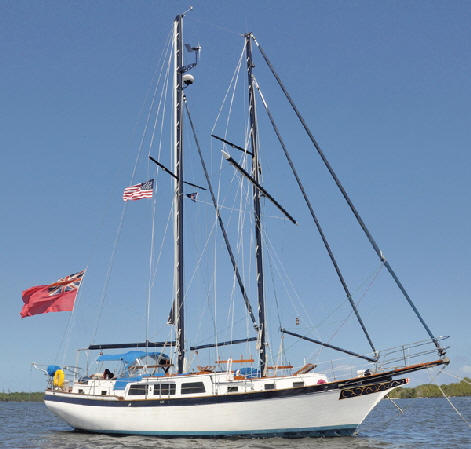
In my opinion a brigantine is the ideal small boat cruising rig, the best of all worlds, capable of hauling tolerably close to the wind with its fore and aft sails; having fast reaching capabilities and unbelievable down-wind stability using the squaresail. Also, like a ketch the sails are divided into smaller manageable sizes. There arn’t many brigantines about nowadays, so before I could have a squaresail I had to find one. I eventually found a suitable boat on my own doorstep in Florida. She was a Down East ketch, circa 1977/8 in a somewhat neglected condition but which I could see had possibilities, both for a rig change and to carry a foredeck yard for a squaresail. 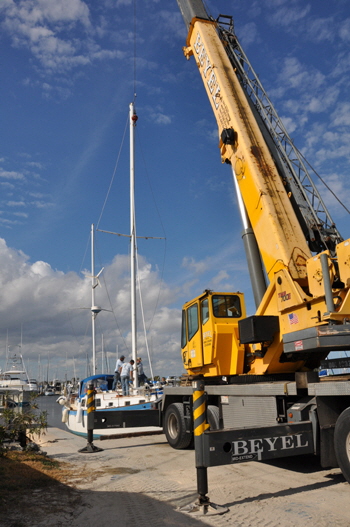
The first step was to remove the two masts and re-work them.
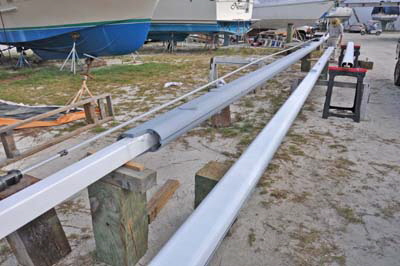
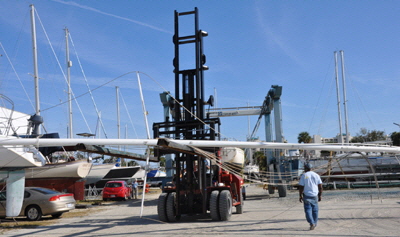 The removal of the main and mizzen masts are covered in another article, but after the masts were removed I and a paid-helper worked on and off on both and their booms for six months in the boatyard. First stripping them of all attachments, winches, rigging, wiring, radar, wind generator, spreaders, lamps, etc. All the old paint was then stripped off that was no small job for a 57-foot mast. Brackets were then welded on to take the new rigging and stays.
I extended the foremast height by 8-feet to produce a wider slot between the jib and fore staysail. The taller foremast also increased the jib luff by some 8-feet that improves her upwind performance. I also needed a taller foremast to be able to carry a Raffee topsail above the squaresail when I ever gat round to it in the future. The foremast was extended with a length of the same mast section and internal splices. The lower squaresail of any mast is called the Course, consequently the squaresail on Britannia is the fore-course.
 I fitted a Facnor roller furling system to the back of the mainmast that converted it into a roller furling mainsail. Originally only the jib was roller furled but I wanted to control all sails from the safety of the cockpit so I also altered both the fore staysail and the ‘tweenmast staysail to roller furling. That made all five sails roller furling including the squaresail.
I riveted aluminum climbing steps all the way up both masts with a double step near the top. These do increase windage, but they are so convenient for single handed mast work.
 The original wires were 5/16-inch and 1/4-inch, but I ordered new wires using 3/8-inch throughout. I also installed twin mainmast backstay chainplates instead of the single one for the original mizzen. I believe in a belt-and-braces approach for an ocean cruising boat.
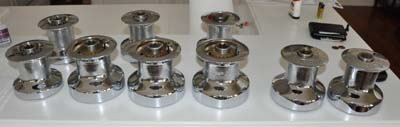
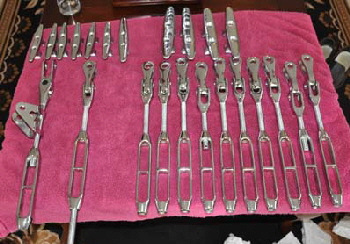 While waiting for the standing rigging to be delivered I had all the rigging screws and turnbuckles chrome plated, along with all the winches and cleats.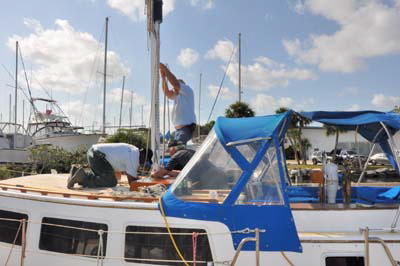
After the masts were put back into Britannia I was hoisted up the mast a dozen or so times to bolt the new wires in place. Thank goodness for the new Maxwell electric windlass that made the job of hoisting me up the mast effortless for the deck crew.
Eventually, with both masts securely stayed the day came to hoist the yard, With help I finally maneuvered the long yard into position across the boat and set up the various control lines. Then up she went on the track I had riveted to the front of the mast. The combined yard and sail weighed 135 lbs. but it was easy using the windlass.
Suddenly I had my brigantine schooner.
We discovered another advantage of having a yard on the foremast. If the skipper and crew fancy a Gin & Tonic about noon, but the sun is still not yet over the yardarm we just lower the yard a bit - problem solved.
The red cross on the Fore-Course is The Cross of St. George on the English flag, that also forms part of the Union Jack. It is also the Templar’s Cross and the emblem of the Red Cross Association, but that just adds to the mystery when my little tall ship is first spotted on the horizon.